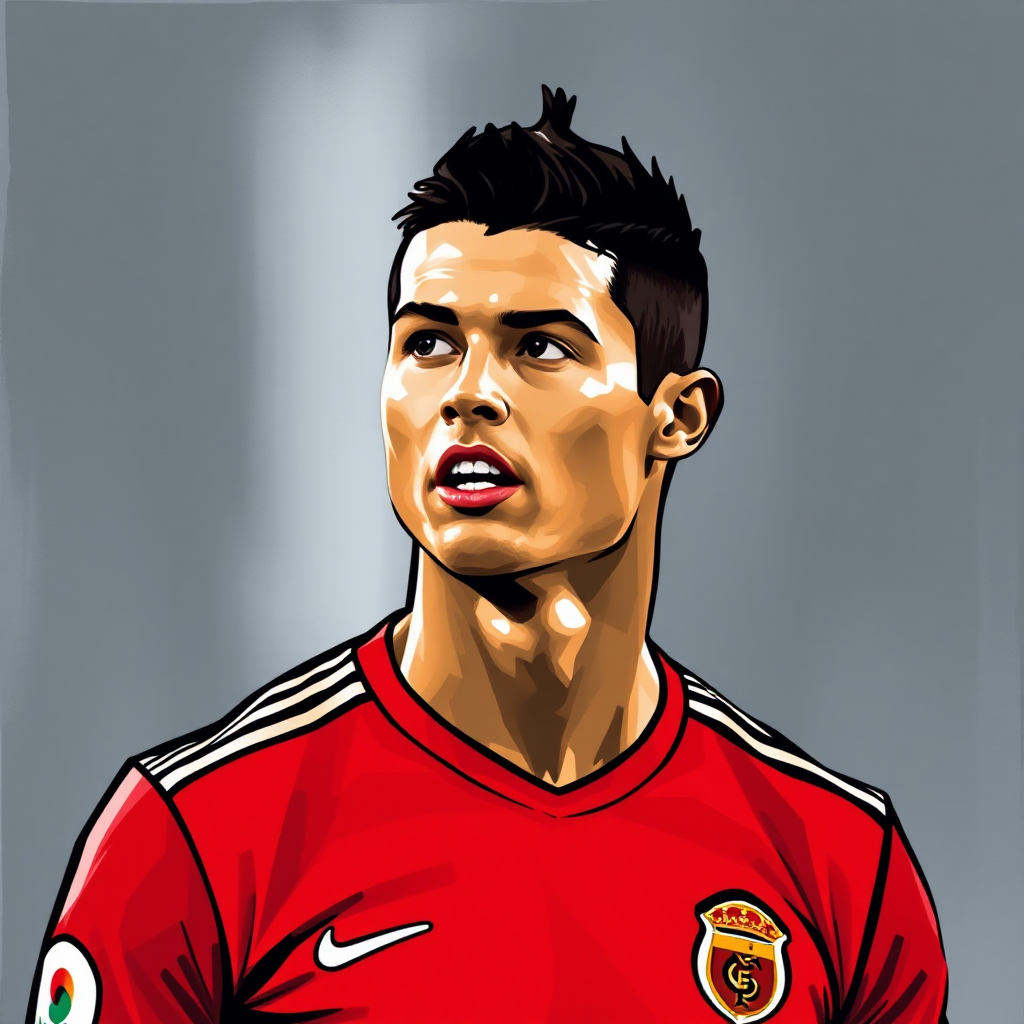
Real Madrid Squad Depth and Rotation Strategy: The Technical Rules Behind Ancelotti’s Choices
Real Madrid’s squad depth is usually described as an endless collection of elite footballers waiting for a chance. That description misses most of the truth. Observing the team’s matchday selections across seasons reveals that rotation at Real Madrid is not a reward system, a fitness experiment, or an emotional answer to fan criticism. It is a precise method for protecting the team’s structure when the schedule starts to conflict with the physical demands of elite competition. Three findings define this method.
- Rotation happens in segments rather than in sweeping changes. Real Madrid rarely changes seven or eight players between matches. The coaching staff manages the team in layers: one sector of the pitch is heavily rotated while another remains untouched.
- The fullback positions and the right side of the attack absorb the highest number of changes. The central defensive partnership and the attacking midfielder preserve the team’s shape, while wide players are treated as interchangeable resources.
- Midfield rotation is load-based, not opponent-based. Instead of simply selecting the best technician for a match, the staff chooses combinations that can sustain intensity for at least 70 minutes, especially across congested periods.
These findings matter because they reframe what squad depth actually means. Real Madrid does not need a second elite eleven that mirrors the first; the club needs role-specific players who can replicate one or two attacking and defensive functions without breaking the team’s coordination.
Rotation Is a Structural Rule, Not a Coaching Preference
The first step to understanding Real Madrid’s rotation strategy is to stop looking at individual matches. The relevant unit is the match period, which usually spans three games in a week: weekend league, midweek Champions League, the following weekend.
In that span, players face three different physical realities. Weekend matches allow a full recovery cycle. A midweek European tie only gives two days of recovery, meaning players lose about a third of their optimal training time. The second weekend match produces fatigue that cannot be fully resolved by two more recovery days. The rotation model must therefore anticipate how a player will arrive at the third start, not merely whether he is fit for the first one.
This is why Real Madrid’s rotation looks different from that of a smaller squad. Smaller clubs rotate because they have no alternative. Real Madrid rotates because certain roles are designed to be shared. The central idea is that the tactical plan should survive the substitutes’ entrance. If a replacement causes the team to lose its defensive reference, the rotation has failed no matter who scored.
The Role of the Coach: A Gatekeeper of Structure
Carlo Ancelotti has overseen most of this process over the past four seasons. His press conferences reveal a recurring principle: he talks about the squad in almost architectural terms. He describes “equilibrium” more often than “talent.” He evaluates a player by how much his profile changes the team’s balances, not by the highlights he can produce.
That perspective shapes the hierarchy inside the dressing room. When a player learns that his role is to alternate with another teammate, he is not necessarily benched because of poor form. He is assigned a load calendar. Players internalize this after their first full season, which explains why many of them seem to accept rotation without public complaints. The rule is simple: the starting line-up is a function of the period, not of the player’s ego.
 Hình minh hoạ: O8
Where Playing Time Actually Flows
Looking at the distribution of minutes across the squad, a pattern emerges that doesn’t match the popular image of a “rotating squad.” Real Madrid’s goalkeeper, for example, is almost never rotated unless he is injured. The core centre-backs have a protection protocol, but it is activated in specific match periods rather than every other game.
Meanwhile, the fullback slots have become a laboratory for rotation because they demand repeated explosive runs. The same happens to the player occupying the right wing in a 4-3-3 or a 4-4-2 midfield diamond, depending on the tactical shape. These positions require repeated sprints, and they are also the least threatening positions to change when the rest of the team retains its formation.
| Pitch Zone | Typical Usage Pattern | Main Substitute Profile |
|---|---|---|
| Goalkeeper | Fixed almost unconditionally in high-profile matches. | Reserve goalkeeper enters only for injury or after qualification is secured. |
| Fullback | High rotation between left and right sides based on opposition wingers. | Defensively disciplined fullback who keeps the width without exposing the centre-backs. |
| Centre-back | Stable core, with one of two spots rotating in congested weeks. | Line-breaking or left-footed central defender who improves build-up against pressing sides. |
| Defensive midfield | Shared by two or three relay players across the season. | A large-ranged midfielder who protects the first press instead of a pure destroyer. |
| Interior midfield | One fixed player plus one rotated slot. | A player who combines passing rhythm with late runs into the box. |
| Wingers and forwards | Sequential alternation: the right wing rotates first, then one of the flank forwards. | A direct dribbler who can attack a tired fullback in the final thirty minutes. |
This table only describes typical behavior; it does not predict a specific lineup. Match context, injuries, and performance in training override any pattern. The value of the table is that it explains why Real Madrid’s “second unit” never looks identical to the first. The substitutes are chosen to preserve the team’s orientation, not to replicate each starter’s skill set.

The Three Positions Where Rotation Stops
If squad depth were unlimited, every position would rotate equally. Real Madrid stops rotating in three zones, even when substitutes have considerable talent.
The goalkeeper is the obvious case, but the more tactically meaningful one is the central striker’s support line. In Ancelotti’s setup, the player behind the striker, whether Jude Bellingham or a natural playmaker, keeps the team’s vertical connections. Removing that player too often forces the wingers to come inside permanently, which then destroys the team’s width. Some rotation happens around that role, but the role itself is seldom redefined.
The second non-negotiable zone is the defensive spine. At least one of the two centre-backs must be a superior dueller with the positional intelligence to start attacks. If both central defenders are rotated simultaneously against elite pressure, the first pass becomes unreadable and the team’s exit strategy collapses.
The third position is the role of the “free” midfielder who has license to decide when to press. In most seasons, that player is a physically tall midfielder with unusual sprinting stamina. Rotation at this spot is a matter of phases. The starting player may leave after 65 minutes, but he almost never misses two consecutive big matches without a very concrete fitness reason.

The Fullback Lab: Where Rotation Is Most Visible
The fullback positions generate the most visible rotation because their workload is enormous in modern football. A Real Madrid fullback must provide width going forward, delay counters, handle one-on-one duels against the world’s best wingers, and cover the half-space when the opponent builds through the middle.
The staff often decides rotation according to the winger facing them. Against a W-shaped winger who cuts inside, the team chooses a fullback who stays narrower. Against a winger who stays wide and attacks the touchline, the team chooses a fullback with more recovery speed. This explains why a fullback can appear twice in one week and then disappear for two games. The schedule is not the only input; the opponent’s attacking profile is equally decisive.
Fans who try to track these patterns across the full season quickly realize that one source is not enough. Fixture calendars, training reports, and official squad lists must be cross-checked. Aggregator pages such as O8 condense the match calendar into a single list, which helps supporters separate a tactical rotation from an injury-forced change. Even so, no external page can substitute for the official lineup that the club announces one hour before kickoff.

Midfield Sequencing: Valverde, Tchouaméni, Camavinga and the Balance Problem
Real Madrid’s midfield is where squad depth is discussed most, but where rotation is actually the most controlled. The presence of Federico Valverde has given the staff a hybrid player: a right midfielder who transitions into a third centre-back after the team gains possession. This role reduces the need for a defensive midfielder to drop deep. It also creates a special kind of rotation logic.
When Valverde shifts into the defensive line, the interior midfielder can step forward. This allows the staff to rotate the “pure midfielder” slot without changing the team’s pressing height. A player such as Eduardo Camavinga brings a left-sided press and a high volume of recoveries, while Aurélien Tchouaméni offers a more disciplined passing base. Both can occupy similar positions, but they do not produce the same tactical result.
Tchouaméni and Camavinga are also not always available simultaneously. The club’s injury history at the centre-back and defensive midfield positions has forced Real Madrid to use either player as an emergency central defender. That is not squad depth in the positive sense; it is depth being consumed by a different problem. Rotations in the midfield still happen, but they are sequenced in “two-game blocks.” The staff decides who starts the first match, who starts the second, and who enters at halftime of the third if the match is still tight.
The simulation of such tactical decisions has also crossed into football’s competitive video game ecosystem. Tournament pages such as Esports o8 show how the same squad logic is evaluated in match-by-match formats where a player’s consistency matters more than his best individual contribution. These virtual competitions are not a reliable tactical analysis tool, but they do illustrate a common principle: swapping a midfielder changes more than the player’s position because his movement patterns affect at least three other teammates.
The Forward Line: Rotation Without Changing the Nature of an Attack
Real Madrid’s attacking depth is overwhelming on paper. The team’s collection of wingers and strikers can easily include Vinícius Júnior, Kylian Mbappé, Rodrygo, and one or two emerging forwards who are already enjoying international recognition. Yet the rotation here is more discreet than fans expect.
Mbappé’s concentration of profile makes him a non-negotiable weekly starter in high-stakes matches. Vinícius Jr. occupies the left side with a specific capacity to disrupt defensive lines. Rodrygo — when he is fit — offers a facility for arriving late in the penalty area, which neither of the two former players does exactly the same way.
Rotation in this group works in two axes. The right wing rotates more than the left, and the central striker position rotates based on who is more effective against a defense that either plays a high line or a deep line. A high defensive line invites a player with vertical running capacity. A deep block invites a player who can operate between the lines and finish from eight yards. This logic applies even when the same names remain in every lineup; what changes is their vertical positioning.
Endrick and Brahim Díaz, when on the squad, provide very different profiles. Endrick’s directness and finishing make him a potential solution for games that break open late in the second half. Brahim’s dribbling in small spaces makes him useful against packed defensive blocks. Their minutes may be short, but their introduction is part of a defined plan: first change at the right side, second change in forward line, third change in the fullback — while the defensive spine remains untouched.
In-Game Rotation Matters as Much as Starting Lineup Changes
Rotation does not stop at the opening whistle. A significant part of Real Madrid’s strategy depends on the timing of substitutions. The staff often uses the 60th minute as a checkpoint: if the match is level or trailing, changes are made to attack the opponent’s tired midfield. If the team is leading, changes are made to protect the ball in midfield and preserve the physical state of the next starter in the schedule.
This is why some players appear to be “strange substitutes.” A defensive-minded player may enter at left back even though his natural position is central midfield. That choice allows the team to secure the side where the opponent is creating overloads. The coach sacrifices attacking identity for one of the substitutes’ most important abilities: preventing a late-game transition.
Load management also influences these substitutions. A player who started the previous match may be given no more than sixty minutes because the staff knows that his sprint volumes have accumulated each week. A substitute entering at minute 63 therefore carries the rest of the match’s physical burden. This division of labor is invisible to the casual viewer but central to the rotation strategy.
The Hidden Limitations of a Deep Squad
Real Madrid’s model is not flawless. A deep squad can actually create an unstable rhythm if the substitutes change the team’s behavior more than its positioning. Young players who receive two starts and then disappear risk losing their “match sharpness,” which is difficult to solve with training sessions alone.
The medical and performance departments also measure the cost of travelling between matches. A rotation plan that works for a fixture played at home can become unmanageable after a Champions League road trip followed by a high-intensity league game. So the actual depth available in a given week is lower than the number of players on the transfer section may suggest, because several players are protected by a return-to-play protocol after tendon loads or muscle overloading. The public only sees the players who enter the official list, not the rotation decisions made two weeks earlier to prevent an injury before it appears.
There is also a delicate psychological limitation: experienced players accept rotation when they trust the medical data. If a player is given a substitute role the same week he performed well in training, his tolerance may weaken. The coaching staff therefore trades playing time as a currency to maintain long-term motivation. This explains why Real Madrid occasionally fields a stronger than expected lineup in a “less important” cup match. That lineup is a message to the non-starters.
A Practical Checklist for Watching Real Madrid’s Next Rotation
To evaluate whether a rotation choice was justified, it is necessary to observe the match through a clear lens. A simple checklist can help:
- Look at the previous three matches: count how many minutes each player accumulated, and compare it with the fixture intensity of the upcoming two weeks.
- Identify the fixed core of the lineup: if the goalkeeper, the attacking midfielder, and the main threat in midfield are all present, the team is protecting its structural spine rather than “resting players arbitrarily.”
- Watch where the rotation appears: fullbacks and the right wing are high-probability change points. If those sectors remain unchanged but the centre-backs change, the match context is unusual.
- Assess the level of the second-minute substitutes: a rotation strategy only works if the replacement preserves the team’s shape. A flashy substitute who leaves the right flank unprotected creates a tactical hole, regardless of the individual’s technical ability.
- Do not judge a rotation strategy by the match outcome only: a rotated lineup can lose for other reasons, while a fixed lineup can win despite being overloaded.
This checklist is not a magical prediction tool. It is a critical filter. It prevents the common mistake of describing a selection as “weak” simply because it includes unfamiliar names.
FAQ
Does Real Madrid rotate more than other top La Liga clubs?
It depends on the metric. Real Madrid tends to rotate significantly in fullback and right-wing positions, but comparatively less in the defensive pivot and central attacking role. Opponents cannot be judged without reading the match calendar first.
Does a deep squad guarantee fewer injuries?
Not necessarily. Squad depth reduces the number of games that players are forced to play while fatigued, but only when the medical department identifies the fatigue early. Without professional load tracking, a deep squad can still suffer as many muscular injuries as a limited squad.
Why do some Real Madrid players seem to play three times in one week?
Because their role is difficult to replace within the team’s structure. Generally, these are the goalkeeper, the main attacking midfielder, or the striker whose pitch positioning opens space for wingers. The coach accepts the workload for these players because replacing them would alter the team’s identity more than their tiredness would.
Is rotation always intended for the long-term season?
No. Some rotations are short-term adjustments designed to nullify an opponent’s specific pattern. If the tactical situation demands two left-footed defenders, the coach will use them even if both are normally competing for the same starting position in the season plan.
The Conditional Verdict: How to Judge the Rotation Strategy
The rotation strategy is only as good as the coach’s capacity to make three conditional decisions: what happens when the opponent presses the rotated players early, how the substitutions react to a midgame reverse, and whether the non-starter uses his minutes to prove his tactical discipline instead of only seeking personal highlights. When those three conditions are met, Real Madrid’s squad depth is validated. When they fail, the team appears disconnected, and the depth is blamed even though the real error was a structural misjudgment.
The model, therefore, deserves neither blind praise nor immediate condemnation. It deserves a conditional verdict: if the rotated player retains the collective shape, if the fixed core supports him, and if the medical staff synchronized the timing of changes with the calendar, the strategy is efficient — sometimes so efficient that Real Madrid can compete on multiple fronts while several star players are still recovering.
But if the schedule is extreme and the core remains unavailable, the squad depth shrinks to what actually can physically start: no club, regardless of its transfer budget, escapes the threshold of fatigue. The beauty of Real Madrid’s rotation method is that it buys the team a margin that most clubs do not have. The danger is when that margin is used for tactical experiments that ignore the positional conditions of the opponent. In those moments, the strategy stops being a method and becomes a risk.