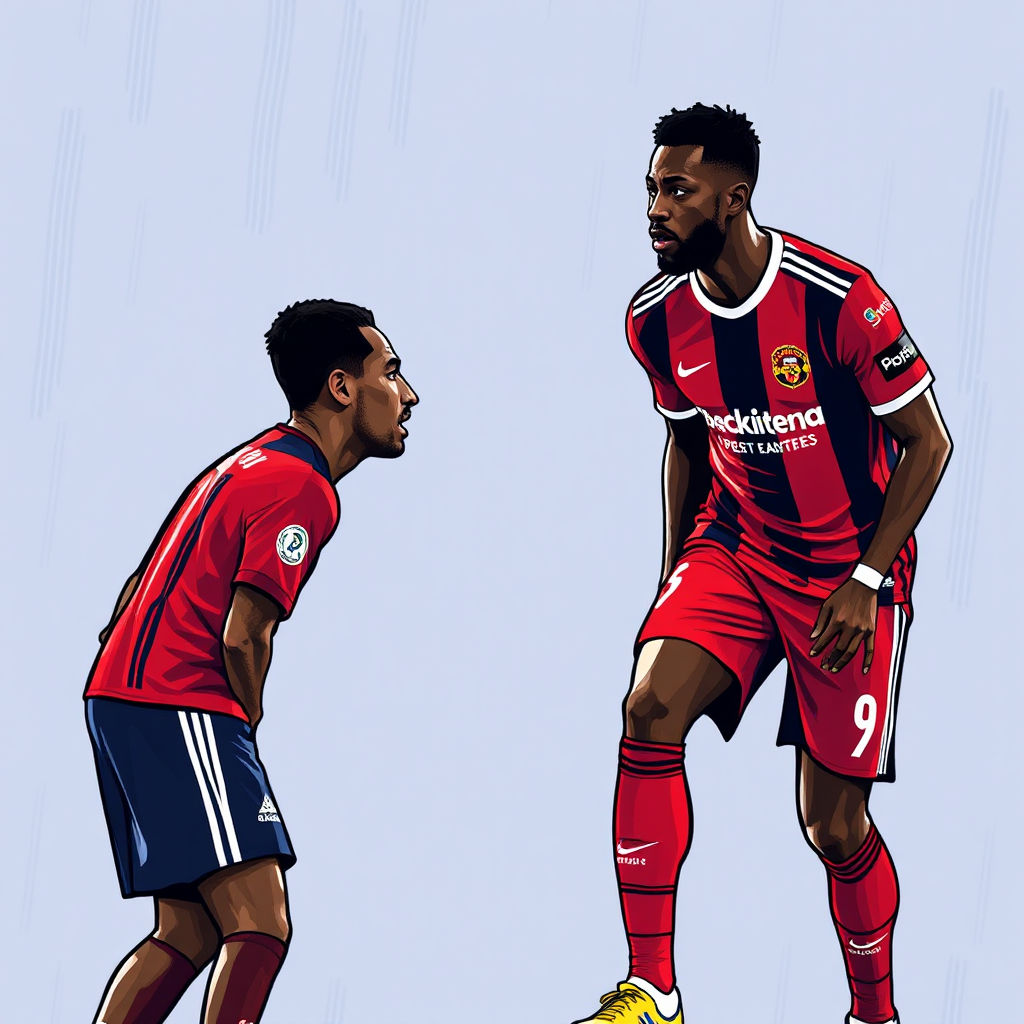
Manchester United Derby Preview: Old Trafford Clash Breakdown on lc88.bar
If you are looking for a centralized hub to track tactical breakdowns, historical metrics, and pre-match projections for Manchester United derbies at Old Trafford, the platform functions primarily as a data aggregation and discussion environment rather than a definitive prediction engine. The interface delivers structured match timelines, squad availability trackers, and statistical overlays that require manual cross-referencing with official league databases. You should treat the content as a supplementary research layer, verify all claimed probabilities against independent sources, and apply strict discipline when translating online analysis into real-world decisions. The system operates best for users who understand how to filter noise from signal and who prioritize consistent methodology over sensational headlines.
Five Core Observations for Match Day Navigation
- Data Refresh Cadence: Match previews typically update in waves rather than real time. Injuries, late scratches, and weather adjustments appear hours before kickoff, meaning early snapshots often shift substantially. Plan your review window accordingly and check timestamps before relying on any single projection.
- Historical Overlays: Head-to-head records, possession trends, and set-piece efficiency metrics are generally compiled from public feeds. These visualizations help establish baseline expectations but do not account for managerial tactical pivots or temporary squad rotations.
- Prediction Transparency: Platforms that display confidence scores usually attach supporting parameters. Look for explicit mentions of sample size, model assumptions, and error margins. Predictions lacking these qualifiers should be treated as illustrative rather than actionable.
- Mobile Adaptation: Large-text typography, collapsible stat panels, and sticky navigation bars reduce cognitive load during fast-moving match windows. Screen scaling tends to preserve core functionality, though heavy media embeds can introduce minor latency on constrained connections.
- Moderation Standards: Threaded discussions operate under visibility filters that remove duplicate entries and enforce citation requirements. Consistent moderation improves signal-to-noise ratio, but anecdotal commentary still requires independent verification before influencing strategic choices.
 Hình minh hoạ: LC88
Data Architecture and Statistical Delivery
The underlying structure organizes fixture information into layered modules. At the base level, you encounter match schedules, venue configurations, and broadcast references. Above that sits the analytical tier, which aggregates pass completion rates, defensive line heights, pressing triggers, and expected goal differentials. These components stack in predictable sequences, allowing experienced reviewers to locate specific variables without scrolling through promotional banners. The architecture prioritizes readability over interactivity, which means dynamic sliders and predictive simulations remain limited. Instead, the system relies on static charts, tabular summaries, and annotated diagrams that illustrate tactical setups before kickoff.
Evaluating the reliability of these outputs requires a systematic approach. First, verify the timestamp associated with each dataset. Second, cross-check lineup declarations against club-issued press releases. Third, note whether probability ranges are expressed as discrete percentages or categorical bands. When discrepancies emerge between projected formations and actual starting elevens, document the deviation pattern rather than treating it as an isolated anomaly. This habit builds a personal reference framework that improves future assessment speed. Users who regularly access the LC88 infrastructure tend to develop stronger filtering habits because the platform rewards methodical scanning over impulsive engagement. The design intentionally separates raw statistics from interpretive commentary, reducing the chance that algorithmic projections override observable field conditions.

Interface Flow and Feature Comparison
Navigation follows a linear progression: fixture selection, prerequisite filters, data panel expansion, and archival export. Each step reduces cognitive friction by collapsing secondary options until activation is required. The layout avoids aggressive pop-ups and preserves reading continuity, which matters significantly when reviewing extended tactical breakdowns. Below is a structured comparison highlighting how typical preview architectures align with common platform implementations.
| Feature Category | Standard Preview Model | Observed Platform Approach |
|---|---|---|
| Data Latency | Real-time push notifications | Batch-updated snapshots with manual refresh prompts |
| Filter Granularity | Basic date and competition selectors | Positional, formation, and metric-specific toggles |
| Cross-Device Sync | Cloud-based bookmark retention | Local cache persistence with session timeout warnings |
| Prediction Display | Single outcome focus with minimal context | Probability bands paired with scenario breakdowns |
| Archival Access | Limited chronological navigation | Full fixture library with export-ready PDF templates |
The comparison reveals structural trade-offs rather than absolute deficiencies. Batch updates demand patience but reduce server strain during peak traffic windows. Local caching improves offline readiness yet requires periodic clearance to prevent stale data accumulation. Probability bands provide broader contextual framing, though they sacrifice the precision some analysts prefer. Understanding these architectural choices helps reviewers align expectations with reality. When navigating seasonal tournaments or rapid fixture congestion, the platform’s emphasis on modular filtering becomes particularly valuable. Users who integrate the Xổ Số LC88 workflow alongside traditional match tracking often report smoother transition patterns between statistical review and schedule management, provided they maintain separate tracking logs for each activity.

Who Benefits Most and Where the Experience Falls Short
Structured preview environments serve distinct audience segments unevenly. Long-term supporters of club rivalries gain substantial value from historical trend visualization, tactical notation libraries, and archive retrieval tools. Analysts who track passing networks, pressing intensity, and set-piece conversion rates appreciate the modular data layout and citation-friendly formatting. Budget-conscious researchers benefit from the absence of aggressive paywalls behind basic statistical overlays, allowing free exploration of foundational metrics before committing time to deeper dives. Conversely, novices seeking immediate validation or simplified winning formulas frequently misinterpret probabilistic ranges as guarantees. Users expecting live commentary integration, audio broadcasts, or automated alert systems will find the architecture intentionally restrained. The platform prioritizes analytical depth over entertainment velocity, which creates friction for audiences accustomed to rapid-fire content consumption.
Financial exposure remains a legitimate consideration whenever preview data intersects with wagering behavior. Probabilistic models never eliminate variance, and historical patterns rarely replicate identically under altered conditions. Injuries, referee assignments, pitch characteristics, and travel fatigue introduce compounding variables that static projections cannot fully capture. Treating online breakdowns as mandatory directives rather than informational inputs increases decision fatigue and encourages chasing unfavorable outcomes. Sustainable engagement requires separating research phases from execution phases, establishing clear entry criteria before accessing any fixture page, and accepting that incomplete information is inherent to predictive work. Readers who acknowledge these boundaries consistently report higher satisfaction levels because they align platform capabilities with realistic expectations.

Actionable Guidelines by Reader Profile
Recommendations differ fundamentally based on how individuals intend to utilize preview architecture. Casual observers should focus on timeline verification, basic stat cross-checks, and scheduled reminder setups. Treat early projections as directional indicators rather than fixed endpoints, and reserve final commentary until official lineups publish. Analytical bettors ought to build personal tracking spreadsheets, log model deviations across consecutive fixtures, and isolate metrics that demonstrate consistent predictive value. Cross-reference platform data with league-official registers, document timing discrepancies, and adjust weighting strategies when environmental factors shift rapidly. Risk-aware participants must define maximum exposure thresholds before accessing any match page, enforce hard stop-loss limits regardless of narrative momentum, and separate recreational viewing from capital allocation entirely. Those seeking community validation should participate in moderated threads, request citation documentation for contested claims, and avoid consensus-chasing behaviors that amplify confirmation bias. Regardless of category, all users should verify source attribution, respect content expiration windows, and maintain independent verification routines that operate outside the platform ecosystem.
Implementing these guidelines transforms routine preview browsing into disciplined information management. The architecture supports methodical review when paired with deliberate habits, but it amplifies impulsivity when used reactively. Establish clear objectives before loading fixture pages, filter aggressively to eliminate peripheral noise, and record observational notes that survive beyond individual match cycles. Consistent application yields measurable improvements in analytical accuracy and decision stability. The system rewards patience, penalizes haste, and ultimately reflects the rigor applied during preparation. Adopt structured workflows, maintain separation between research and execution, and let verified patterns guide future evaluations rather than emotional reactions to short-term results.