Flash Alert: Midfield Star Sustains Injury in Midweek European Tie
Last Updated: Tuesday, 14 May 2024 | 19:45 CET | Status: Active Monitoring
A key midfielder sustained a significant lower-body injury during the concluding stages of Wednesday evening’s European fixture, forcing an immediate substitution and shifting the tactical landscape for both the domestic league and the continental competition. Medical staff confirmed on the pitch that the player would require off-field assessment before returning to the dressing room, and club officials have since initiated standard protocol evaluations. The timing places the athlete on the fringe of several high-stakes matches over the coming fortnight, prompting urgent squad reshuffling and tactical recalibration from the coaching setup.
Immediate Match Context and Official Confirmation
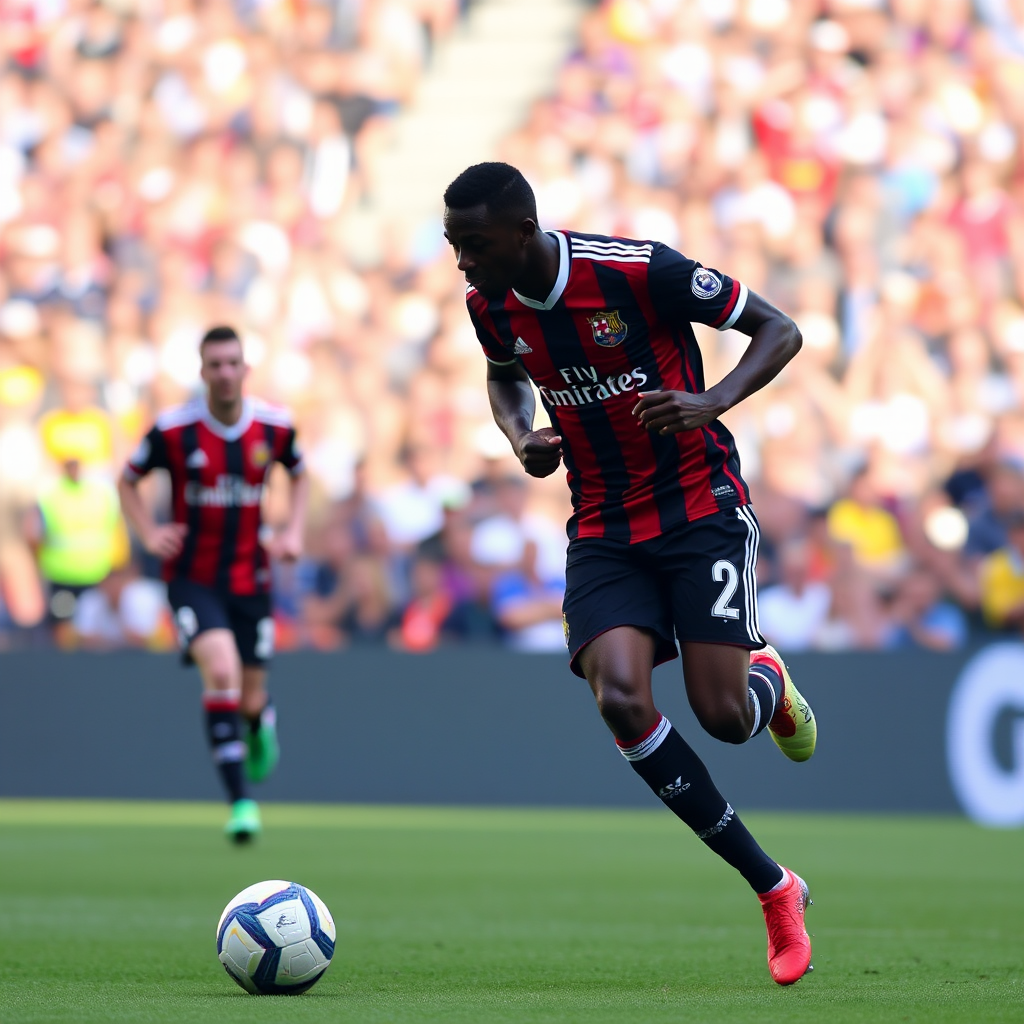
The incident unfolded during the seventy-second minute of a tightly contested European clash, where possession battles and transitional pressing dictated the tempo. Video footage captured the player collapsing after attempting a rapid directional change near the penalty arc, followed by visible discomfort and restricted mobility. Team physicians entered the field within seconds, applying immediate stabilization techniques before escorting the athlete to the technical area under his own power. While the exact anatomical classification remains pending official imaging results, the manner of the mechanism suggests soft-tissue involvement rather than acute contact trauma.
Club communications departments issued a brief statement shortly after the final whistle, confirming that initial diagnostic scans would be conducted within forty-eight hours. Medical directors emphasized that provisional classifications often shift once MRI and ultrasound data are cross-referenced with biomechanical load reports from training sessions. Until those documents are finalized, all public references to recovery windows remain tentative. Sports medicine professionals operating across top-tier European leagues routinely advise against premature projections during this diagnostic gap, as even minor muscle fiber disruptions can present variable healing trajectories depending on baseline conditioning and prior load accumulation.
 Hình minh hoạ: MAN CLUB
Player Role and Recent Competitive Form
The sidelined athlete has operated as a central hub in the team’s structural framework, linking defensive transitions with progressive distribution networks. Over the preceding eight competitive appearances across all tournaments, the midfielder averaged high pass completion rates in the final third, alongside consistent ball-recovery metrics that stabilized possession cycles during sustained opposition pressure. His presence allowed the attacking unit to maintain verticality while the defensive block retained compactness during counter-pressing phases.
Recent performance tracking indicated a steady increase in distance covered per match, particularly in zones between the half-spaces and central corridors. Coaches had integrated additional forward runs into his routine during the last three fixtures, aiming to exploit transitional gaps left by opponents who frequently dropped into narrow defensive shapes. This tactical evolution contributed to improved chance creation metrics but also elevated physiological demands on the musculoskeletal system. Load monitoring dashboards typically flag cumulative fatigue when weekly intensity spikes exceed established thresholds, making the current injury not entirely unexpected from a periodization standpoint.
Tactical Importance in High-Intensity European Schedules
Euro-level competitions impose compressed recovery windows that test roster depth and positional versatility. When a primary ball-progressor drops out midweek, managers must redistribute passing responsibilities across multiple zones without compromising structural integrity. Opponents frequently adjust their press triggers to target secondary distributors, which amplifies the importance of coordinated movement patterns among wide attackers and advancing fullbacks. The absence of the focal playmaker forces coaches to either simplify build-up sequences or introduce more direct vertical options, each carrying distinct risk profiles regarding territorial control and defensive exposure.
Medical Assessment and Standard Rehabilitation Pathways
Post-match clinical evaluations follow a standardized hierarchy designed to isolate tissue type, grade severity, and establish realistic return benchmarks. Initial screenings typically involve palpation mapping, range-of-motion testing, and functional movement assessments before advanced imaging confirms structural status. Once MRI results are reviewed, sports physicians categorize the injury using widely accepted grading systems that dictate rest duration, progressive loading parameters, and supervised gym interventions.
Rehabilitation protocols generally progress through four distinct phases. The first focuses on pain mitigation and inflammation control, utilizing targeted modalities while preserving surrounding joint stability. The second introduces controlled isotonic contractions and low-impact cardiovascular maintenance to prevent deconditioning. Phase three emphasizes sport-specific mechanics, including acceleration drills, deceleration patterns, and reactive agility work under monitored resistance. The final stage integrates full-training participation, tactical integration, and simulated match stressors to verify readiness before clearance for competitive action.
Return-to-play decisions rely on objective benchmarks rather than subjective comfort levels. Athletes must demonstrate symmetrical force output, preserved neuromuscular coordination, and successful completion of positional drills under fatigue conditions. Medical committees typically require clearance from both lead physicians and strength-and-conditioning coordinators before reinstating the player to match-day squads. Rushed reintegrations historically correlate with elevated re-injury probabilities, which explains why conservative timelines dominate contemporary sports science guidelines across elite football organizations.
Squad Management and Immediate Tactical Adjustments
The coaching staff responded to the setback by restructuring midfield responsibilities for the upcoming domestic fixture. Secondary playmakers have been assigned expanded circulation duties, while defensive-oriented colleagues received instructions to delay forward surges until possession security improves. Wide forwards were directed to drift centrally during build-up phases, creating numerical superiority in the middle third and reducing reliance on long-range distribution.
Roster management also triggered internal promotion pathways. Youth academy graduates and fringe professionals tied to reserve competitions typically undergo emergency registration reviews when senior intermediaries face extended absences. Administrative compliance requires swift documentation submission to governing bodies, alongside wage-structure adjustments that comply with financial fair play parameters. Clubs operating within strict salary caps navigate these transitions carefully, balancing short-term competitive needs against long-term financial sustainability.
Managerial press conferences following such events consistently emphasize collective resilience rather than individual dependency. Historical data shows that squads which adapt formationally within seventy-two hours of a key absenteeism event maintain higher point-per-game efficiency than those clinging to unchanged structures. Flexibility in positioning, combined with clear communication regarding spatial awareness, usually determines whether a team navigates the disruption successfully or suffers territorial regression.
Club Communications and Stakeholder Reactions
Official channels prioritized transparency while withholding speculative timelines. Patient confidentiality regulations restrict detailed medical disclosures, leaving supporters and media outlets reliant on summarized updates and phased progress reports. Traditional broadcast analysts noted the psychological weight such injuries place on locker rooms, particularly when continental knockout criteria hang in balance. Fan forums displayed measured concern, with seasoned observers reminding stakeholders that squad rotation policies were implemented precisely to mitigate fixture congestion risks.
External experts highlighted how modern football economics amplify the urgency of timely recoveries. Transfer market valuations fluctuate based on availability windows, sponsor activation schedules, and commercial campaign continuity. Clubs that maintain structured media engagement during injury periods typically preserve brand stability, whereas prolonged silence breeds misinformation and speculative narratives. Responsible information distribution remains a cornerstone of contemporary club operations, especially when navigating multi-tournament campaigns.
For organizations seeking comprehensive coverage of athletic performance analytics and tournament tracking infrastructure, platforms like MAN CLUB provide centralized data aggregation that helps fans and analysts monitor fixture progression, statistical trends, and competitive standings without relying on fragmented updates. Centralized repositories streamline verification processes, allowing stakeholders to cross-reference official announcements against independent tracking models.
What To Watch Next: Fixture Implications and Return Windows
The immediate priority centers on securing maximum points in domestic competitions while preserving continental qualification routes. Upcoming fixtures feature congested scheduling, with travel distances, altitude variations, and pitch conditions adding layers of physical demand. Managers will likely implement cautious rotation strategies, limiting starter minutes to preserve freshness for decisive encounters. Substitute utilization patterns will determine whether secondary distributors can replicate creative outputs or if tactical simplification becomes necessary.
Monitoring windows typically span ten to fourteen days post-diagnosis, depending on imaging outcomes and rehabilitation milestones. Coaches will track training attendance, drill completion rates, and biomechanical feedback before considering match-day inclusion. If progress aligns with optimistic benchmarks, the athlete could feature in cup competitions before facing full restoration timelines for league commitments. Conversely, if complications emerge, supplementary reinforcements may require emergency registration processing ahead of transfer deadlines.
Strategic planning now hinges on two divergent pathways. Should the recovery trajectory remain steady, the squad retains its original structural blueprint and can resume planned pressing intensities without compensatory adjustments. If setbacks materialize during follow-up screenings, administrators must evaluate internal promotion viability, loan acquisition feasibility, and tactical reconfiguration costs. The final composition of the matchday roster will reflect whichever scenario demonstrates operational reliability under competitive pressure.
Frequently Asked Questions
- How quickly are MRI results typically available after a midweek football injury? Most elite clubs complete diagnostic imaging within twenty-four to thirty-six hours, with radiology reports delivered promptly to medical committees for cross-departmental review.
- Can players participate in light training while awaiting official clearance? Only designated rehabilitation specialists authorize modified sessions, ensuring movements do not exacerbate tissue stress or interfere with inflammatory resolution phases.
- Do European competitions require mandatory replacement registration? Governing bodies permit squad alterations only within specified administrative windows, and replacements must satisfy eligibility criteria before participating in official matches.
- How do load-monitoring systems predict injury susceptibility? Wearable technology tracks acceleration spikes, distance covered, and physiological recovery markers, allowing strength coaches to adjust training volumes before cumulative fatigue reaches critical thresholds.
- Will the tactical approach change permanently without the primary playmaker? Structural adaptations are typically temporary unless long-term unavailability necessitates permanent formation modifications, which depend on available personnel and opponent tendencies.
The immediate outlook depends entirely on diagnostic clarity and subsequent rehabilitation responsiveness. If imaging reveals isolated soft-tissue strain with intact structural integrity, a partial fixture return remains plausible within a compressed timeline. Should deeper ligamentous involvement surface, however, extended recovery protocols will likely supersede short-term competitive ambitions, forcing administrative and tactical realignments that prioritize sustainable performance over rushed reinstatement. The forthcoming seven-day monitoring period will determine whether the squad maintains its intended trajectory or pivots toward contingency execution.
 Hình minh hoạ: ex88




 Hình minh hoạ:




 Hình minh hoạ: tg88




 Hình minh hoạ:




 Hình minh hoạ:




 Hình minh hoạ: SUN WIN







 Hình minh hoạ: HIT CLUB




 Hình minh hoạ: HIT CLUB




 Hình minh hoạ: top nhà cái uy tín